Decoding Video Game Grades: Essential for Retro Collectors
The world of video game collecting has evolved dramatically. What once started as a passion for playing and preserving digital art has transformed into a dynamic market where rarity, nostalgia, and condition dictate significant value. For retro collectors, understanding the nuances of professional video game grading is no longer just an advantage—it's an essential skill. Navigating the landscape of
rare retro game grading ensures authenticity, maximizes investment potential, and preserves gaming history for future generations.
The Rise of Professional Video Game Grading
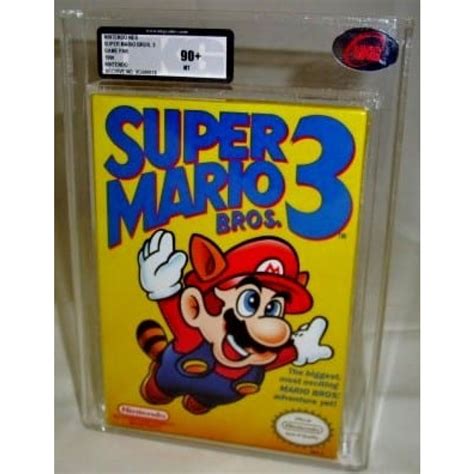
Gone are the days when a game’s condition was solely a matter of personal opinion. The increasing value of vintage titles, especially those from iconic consoles like the NES, Super Nintendo, N64, PlayStation, and Sega Genesis, necessitated an objective, standardized system. This demand led to the emergence of professional grading services that meticulously evaluate a game's state, assign a numerical grade, and encase it in a protective, tamper-evident holder.
One of the prominent players in this arena is CGC Video Games, a division of the Certified Collectibles Group. Founded in 2000, CGC's mission is to empower collectors by igniting passion, creating value, and building community. Their expert graders combine deep knowledge and passion to accurately and consistently assess games using a nuanced 10-point numeric grading scale, complemented by letter grades for factory seals. CGC's commitment extends to their superior video game holder—sleek, crystal clear, and designed for maximum protection. These holders also incorporate advanced security features like microprinting, UV ink, and QR codes, providing collectors and dealers with unparalleled confidence and making transactions safer and more transparent. Every game, box, manual, and insert certified by CGC is backed by their industry-leading CGC Guarantee, further solidifying trust in the market.
More recently, established grading giants like PSA have also entered the video game grading space, adding another layer of complexity and opportunity for collectors. This expansion signals a robust market, particularly for games deemed "rare" or "expensive," where the grading of a single title could validate thousands of dollars in value. Other notable services like WATA Games and VGA have also played significant roles in shaping the professional grading landscape for vintage video games, providing collectors with various options depending on their specific needs and the type of game being submitted.
Decoding the Grading Scales: What Do Those Numbers and Letters Mean?
Understanding the terminology used by grading companies and in the wider collector community is paramount. While professional services like CGC utilize a detailed 10-point numeric scale, the general language of condition remains foundational. Familiarity with these terms allows collectors to roughly assess items even before considering professional grading.
Here’s a breakdown of common condition descriptors, often found in retail listings and used as a basis for more granular grading:
*
SW (Shrink Wrapped): This indicates an item still in its original factory shrink wrap. Often, the visible condition through the wrap is also noted, e.g., "SW (NM)" for a shrink-wrapped item in near-mint condition. This is typically the highest possible "unopened" state.
*
Mint (M): Signifies a perfect, brand-new item. In professional grading, this corresponds to the highest possible scores (e.g., a perfect 10).
*
Near Mint (NM): Items are like new, showing only the slightest, almost imperceptible wear. They are often indistinguishable from a Mint item and are highly collectible. For board games, this implies very little to no wear, and counters are typically punched unless specified otherwise.
*
Excellent (EX): Lightly used, but still almost like new. May exhibit very small spine creases or slight corner wear. Crucially, there should be no tears or marks, making it a very collectible condition.
*
Very Good (VG): A used item that might show medium-sized creases, corner dings, minor tears, scuff marks, or small stains. Despite these flaws, it remains complete and very useable.
*
Fair: This condition describes a very well-used item that is still complete and usable. Expect more significant flaws such as tears, pen marks or highlighting, large creases, stains, and general heavy wear.
Modifiers and Specifics:
* A plus sign (
+) indicates an item is slightly better than its stated condition, leaning towards the next highest grade (e.g., EX+ is between Excellent and Near Mint). A minus sign (
-) denotes the opposite.
* For boxed items, conditions are often listed as "box condition/contents condition" (e.g., "VG/NM" means a Very Good box with Near Mint contents). If only one condition is listed, both are assumed to be the same.
* Major defects or missing components are always noted separately.
* A
Remainder Mark is a small black line or dot, usually on the page edges or UPC, indicating the item was once considered surplus inventory. While not a defect, it impacts collectibility.
These distinctions are vital because even minor imperfections can significantly impact a game's final grade and, consequently, its market value. The precision and consistency applied by professional graders are what lend credibility to the process, ensuring that a "CGC 9.8" or a "WATA 9.6 A++" means the same thing to every collector.
Why Grade Your Rare Retro Games? Value, Preservation, and Peace of Mind
The decision to pursue professional
rare retro game grading is multifaceted, driven by a blend of financial prudence, a desire for preservation, and the pursuit of peace of mind. For serious collectors, especially those with high-value assets, the benefits often outweigh the costs.
One of the primary motivators is
investment potential. A professionally graded, high-condition rare retro game can command significantly higher prices in the secondary market compared to an ungraded equivalent. This is especially true for iconic titles across platforms like N64, NES, Super Nintendo, DS, 3DS, and Sega Mario. The "worth it" question, often raised when considering grading services like PSA, hinges on the game's inherent rarity and current market demand. A PSA-graded copy of a game worth thousands ungraded will inherently command more, as the grade validates its condition and authenticity. This aspect is crucial for collectors looking to safeguard or grow their financial stake in the hobby. For a deeper dive into which service might be best for your collection, especially when considering the nuances of different providers, check out our comparison:
CGC vs. PSA: Maximizing Value for Your Rare Retro Games.
Beyond financial considerations, professional grading offers unparalleled
preservation. The secure, archival-quality holders from companies like CGC protect games from environmental damage, dust, moisture, and accidental handling wear. This is particularly important for delicate cardboard boxes and manuals of vintage games, which are highly susceptible to degradation over time. Encapsulation essentially freezes the game's condition at the time of grading, ensuring its longevity for decades to come.
Finally, grading provides
authentication and confidence. The industry-leading guarantees and security features embedded in graded cases—such as microprinting, UV ink, and QR codes—verify the item's authenticity and the integrity of its grade. This instills trust among buyers and sellers, simplifying transactions and reducing the risks associated with acquiring valuable items. Knowing that an expert team has meticulously evaluated a game, backed by a robust guarantee, offers immense peace of mind. This shared confidence fuels a healthier, more vibrant collecting community. Ultimately, whether the cost of grading justifies the potential return is a complex calculation every collector must make. We explore this further in
Grading Your Rarest Games: Is it a Smart Investment Move?
Practical Tips for Retro Collectors Considering Grading
Embarking on the journey of professional video game grading requires careful consideration and preparation. Here are some actionable tips for retro collectors:
1.
Identify Your Candidates Wisely: Not every game needs to be graded. Focus on titles that are genuinely rare, have significant market value, and are in excellent or near-mint condition. Grading a common, low-value game, or one in poor condition, will likely result in a net loss once fees are factored in. Research current market prices for graded vs. ungraded versions of your games.
2.
Understand the Grading Criteria: Each service may have slight nuances in their grading methodology. Familiarize yourself with how they evaluate specific components like the box, manual, cartridge/disc, and factory seal. For example, CGC's distinction between numeric grades for games and letter grades for seals highlights this specificity.
3.
Pre-Inspect Your Games Meticulously: Before sending your game off, perform a thorough personal inspection. Look for every crease, ding, tear, scratch, and mark. Understand that what appears "Mint" to you might be "Near Mint" or "Excellent" to a professional grader with a magnifying glass and years of experience. Be realistic about the potential grade.
4.
Handle With Extreme Care: Once you decide to grade a game, handle it as little as possible and always with clean hands. Any new damage, however minor, could drop its grade significantly. Consider using archival-safe sleeves and boxes for temporary protection.
5.
Choose Your Grading Service: Research the reputation, turnaround times, pricing structure, and holder quality of various services (CGC, PSA, WATA, VGA). Each has its strengths and perceived market standing. Some collectors prefer one service over another for specific console generations or game types.
6.
Factor in All Costs: Beyond the grading fee, account for insured shipping to and from the grading company, and any potential membership fees. These costs can add up, especially for high-value items requiring premium insurance.
7.
Prepare for Submission: Follow the grading company's specific submission instructions carefully. Ensure all components are present, and the game is packaged securely to prevent damage during transit. Avoid any attempts at "cleaning" or "restoring" that could be perceived as tampering, as this can negatively impact the grade or even lead to rejection.
In conclusion, understanding
rare retro game grading is no longer just for the elite investor; it's a vital tool for any serious retro collector. It offers a standardized language for condition, safeguards valuable assets, and instills confidence in a burgeoning market. By embracing professional grading, collectors not only preserve their cherished memories but also contribute to the lasting legacy of video game history. Whether you're aiming to maximize your collection's financial value or simply protect a piece of your past, professional grading stands as an indispensable service in the modern era of video game collecting.